

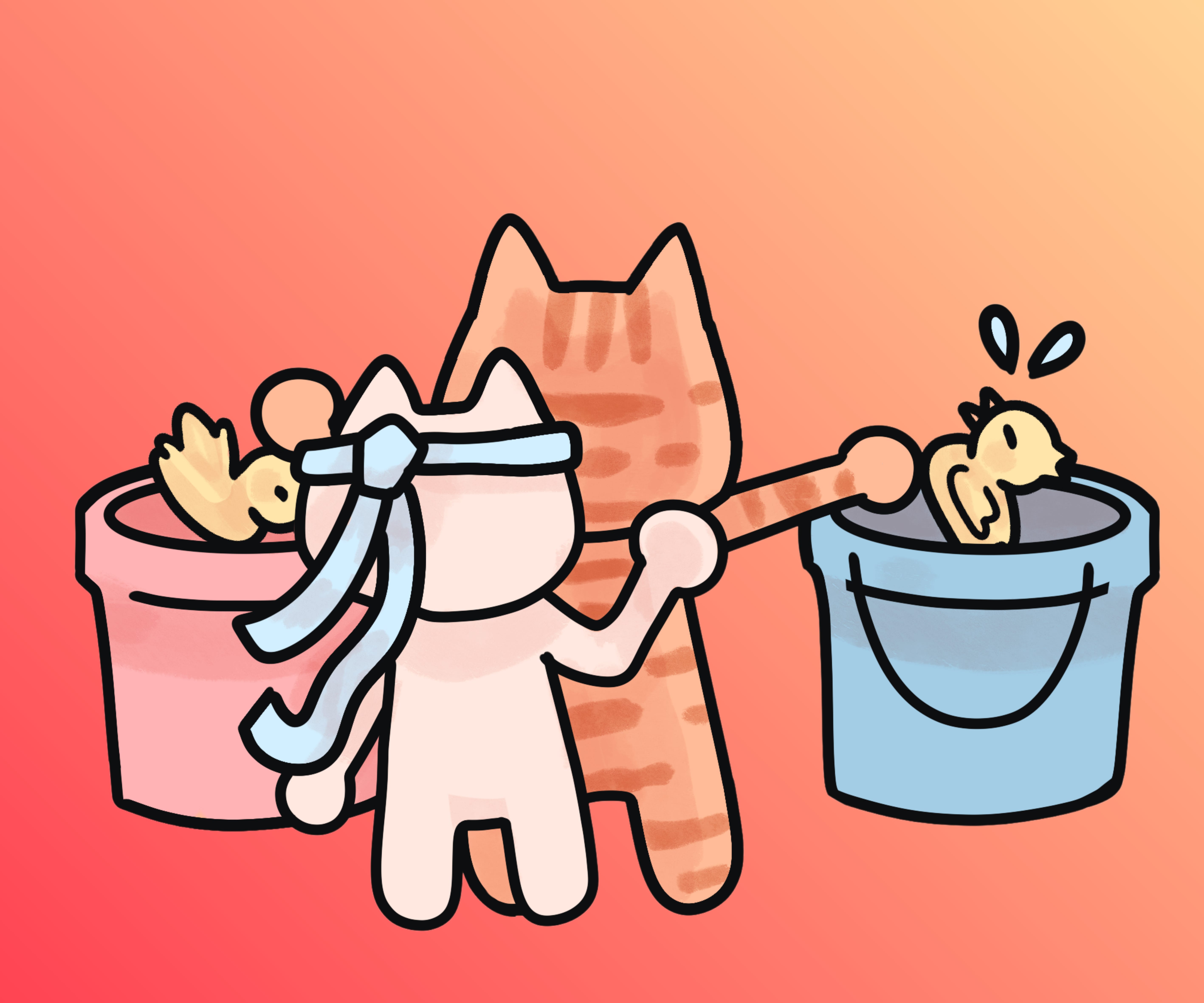
There is a story I have always found fascinating. It’s about chicken sexing. Whenever I tell this story, people laugh, but indulge me.
When baby chicks hatch, workers need to sort the newborn boys from the girls immediately. In the egg industry, girl chicks are highly valuable because they grow up to produce eggs. However, boy chicks of these breeds cannot lay eggs and do not build enough muscle to be used for meat, so they are culled. The selected girl chicks are then shipped across the country to their new homes at just a day or two old.
It sounds like it should be simple, but it isn’t. The difference in a day-old chick is almost invisible. When the vent-sexing technique was first developed in Japan, even those who had done it for a long time couldn’t articulate what they were looking for or explain it to others. They just instinctively knew and somehow got it right.
How do you teach something that even experts can’t describe?
The Apprenticeship Model in the AI Era
Once upon a time, most expertise was developed through apprenticeship rather than lectures or books. But as we formalized education and made training more routine, that fell away. Yet in some fields, the apprenticeship model remains critical.
Such is the case in chicken sexing. Someone who is learning stands at the table and makes a call on each chick. The expert stands behind them, judging each decision. When the apprentice gets it right, they are allowed to continue. But when they get it wrong, the master taps them on the shoulder and corrects them.
Gradually, the student learns from the instructor’s expertise and develops the same sixth sense of what is right. They are actually pattern-matching through trial and error. Then one day, their accuracy is close to the expert’s.
This skill is incredibly valuable to poultry farms. The Japanese method was exported to the US in the 1930s, and by 1937 the first chick-sexing school in the country had opened. It created jobs for Japanese Americans. In the decades that followed, Korean and Mexican immigrants increasingly filled these jobs. If you’ve seen Minari, you’ll remember Steven Yeun’s character spending his days sexing chicks at a hatchery. That job was real, and it was passed hand to hand, shoulder to shoulder.
The Skill Behind the Skill
So much of what we do in professional fields is like this. Few of us went to college to learn from books what it takes to be a great product manager, designer, or marketing leader. We learn on the job, one mistake and one success at a time. Great managers give us feedback to help us improve and grow, and over time we get better and better.
At its core, much of knowledge work requires taste and expertise. It takes trial and error, and it requires mentors and managers who are willing to put in the time to give us signals on how to improve.
Doctors go through an intensive apprenticeship to learn the craft after years of studying from books. Lawyers are trained on the job as associates. In the era of AI, both could feed a patient’s or client’s information into an AI tool and get an answer, but they need to build the instinct to know whether the output is right. A first-year medical intern or legal associate is learning on the job and building their experience base so they can one day practice on their own.
Honing Your Instincts
The same is true in tech. Product sense is a skill, but it is learned over time. Some people start with more intuition for it and others with less, but exposure to quality over time gives you a baseline to build from. There isn’t a checklist or a specific set of rules. A great product is something you feel and experience.
I learned through many taps on the shoulder, whether a comment on a document or feedback on a slide. I learned by listening and adapting, and those reps are what built my judgment and intuition. Each piece of feedback was a tap, a correction that honed my instincts and helped me get better over time.
Here is the secret to most knowledge jobs: the most important things you learn at work are rarely written down or learned from a book. As AI gets better and better at everything that can be written down, the things that can’t are becoming the most valuable skills we have.
The danger now is that AI makes it too easy to just sort the chicks. Without feedback on what is good, you can make mistakes and never learn from them. Your job is to find ways to keep the loop going so you can improve, rather than just outsourcing the thinking to someone else.
How to Learn What Can’t Be Written Down
Doing is learning. Watching is not the same as learning. The novice has to sort the chick, not just observe the master do it. You have to draft the deck, give the presentation, or write the spec before someone can give you feedback on it. You can’t learn by osmosis. Instead, focus on doing, and then ask an expert to explain what they would have done. Then slowly close the gap.
Ask for the tap. Most of us get feedback once or twice a year in a formal review. That’s like getting one tap for every couple dozen chicks. Ask for small, frequent, honest feedback. “What is one thing I could have done differently?” is one of the most powerful questions you can ask because it gives the other person permission to tap you on the shoulder. This is human recursive self-improvement.
Get your reps. There is no shortcut. I have written this newsletter nearly every week for five years, and my writing only got better because I kept shipping it. You have to put in the time to build the muscle. Volume is the path to quality, and only by doing can you build intuition.
Pay it forward. You know you’ve mastered a skill when you can teach it to others. Learn it first, and then see if you can pass on the expertise. If you can, you have achieved enough mastery to apprentice someone else.
We live in a world that wants everything documented, templated, and scaled. But learning by doing and getting feedback is often the best way to level up your expertise.
Seek out a master to learn from, and you will soon become the expert yourself.
one of the best articles about product sense I have read 👏
so true