
From Symphony to Jazz
Adaptability in the Time of AI Is a Skill Worth Cultivating

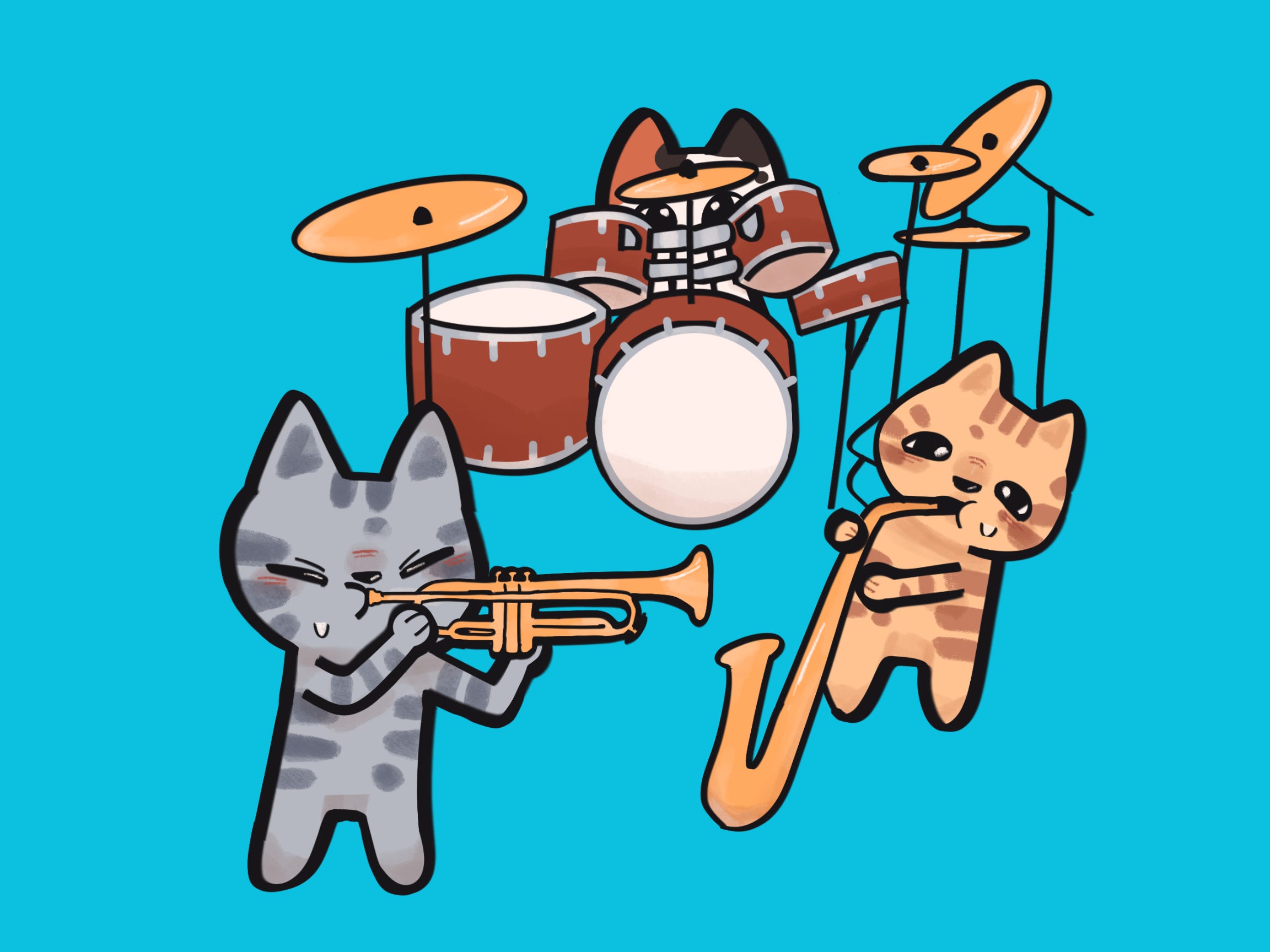
For most of my career, we built companies like symphonies. There was a conductor. The music selection was impeccable. There was a written score. There were sections in which the strings, woodwinds, brass, and percussion each knew their part. Half a beat off, it became cacophony. But in sync, they created beautiful, complex music together. Sure, it was hard to get 70 to 100 musicians to play in concert, but the results were rich and breathtaking.
The same was true of tech companies. As products got more complex and coordination costs increased, there were more and more specialized functions. The atomic unit of success shifted from a PM and an engineer to two dozen people across eight different functions working together to get things done. Product, engineering, design, analytics, research, technical program management, content strategy, and product marketing all played their part.
We created complex roadmaps locked in advance. We managed handoffs and code reviews. We planned and replanned. If everyone played their part correctly, products shipped, and customers were serviced well. For years, that model worked and scaled.It ended up building some of the most iconic software companies of our generation.
But we are not in a symphony world anymore. We are moving into a jazz world.
The Symphony World Is Changing
The symphony world is optimized for stability and predictability. It is designed for power, scale, and richness. Large teams operate with defined roles. Handoffs are structured. Specifications are detailed. There are rehearsals and careful preparation. If a violinist suddenly experiments mid-performance, the entire piece can fall apart.
This model made sense when:
Software was expensive to build
Iteration cycles were long
Coordination costs were high
Tools were relatively static
You needed orchestration because changing direction was costly. The score had to be right before you started playing.
It is important to acknowledge that symphonies are not rigid machines. Great orchestras interpret. They respond to the conductor. They shape phrasing and tempo together. Discipline and artistry coexist. In the same way, great companies have always balanced process with creativity. The difference today is not that orchestration disappears. It is that it is no longer enough.
The Jazz World is Upon Us
In jazz, a small group of musicians plays within a loose structure. There is still a key. There is still a tempo. There is still a shared understanding of the form. But within those guardrails, improvisation happens in real time. Musicians listen closely to one another. They adjust mid-phrase. One introduces a riff. Another builds on it. The music evolves as it is being played.
That is the world AI is pushing us into.
A prototype can be spun up in a single afternoon and shown to customers. Suddenly, the strict boundaries between roles begin to blur. PMs can prototype and run research. Designers can build experiences to test with users. Engineers can shape product direction. The sheet music becomes more of a suggestion than a rule.
One of the biggest shifts is not technological. It is cultural. In jazz, roles are fluid. The pianist may carry the melody for a while. Then the saxophone. Then the trumpet. Each musician remains a master of their instrument, but they are also deeply attuned to the group.
AI is lowering the cost of crossing boundaries and creating opportunities for cross-training. You no longer need to wait for another team to produce the first draft. Exploring, testing, and learning become everyone’s responsibility.
This does not eliminate specialization. In fact, jazz requires extraordinary discipline. Improvisation is only possible when mastery is already in place. The real skill is not freedom from structure. It is the ability to create within it.
From Conductor to Bandmate
Leadership changes too.
In a symphony world, the conductor aligns dozens of people to a fixed plan. The goal is precision. Success is measured by how faithfully the score is executed.
In a jazz world, leaders create conditions. They set themes and guardrails. They build small, high-trust teams. They encourage experimentation while maintaining coherence. Feedback is continuous and dynamic. Instead of asking, “Did you follow the score?” they ask, “Did we create something better together?”
Listening becomes the defining leadership capability. Not just listening to customers, but listening across functions. Listening for signals. Listening for new ideas emerging from unexpected places.
Each individual now needs both depth and range. The ability to go deep in a craft still matters. But so does the ability to step into adjacent spaces and contribute.
The Risk of Staying Orchestrated
There is a danger in clinging to the symphony model too long. There was a time when big ate small and where rollups and integrations made sense. Then came a period when small ate big and disruptors arrived on the scene. Today we live in a world where fast eats slow.
Large organizations are comfortable with orchestration. Clear roles. Clear approvals. Clear hierarchy. These structures provide safety and predictability. They also create inertia.
Jazz requires discomfort. It requires:
Letting go of perfect plans and rigid roadmaps
Accepting iteration as the default
Giving people more autonomy to make mistakes
Trusting judgment over process
This is especially difficult for leaders who built their careers mastering orchestration. The instinct is to grip the conductor’s baton tightly because control feels safer.
But when tools evolve monthly, freezing the score becomes the greatest risk.
What This Means for You
Ask yourself:
Are you optimizing for orchestration or adaptation?
Are your teams small enough to respond quickly?
Do people need permission to explore?
Are roles rigid or fluid?
If you are a PM, are you waiting for engineering to build your ideas, or are you prototyping them yourself?
If you are a designer, are you waiting for research or analytics to give you feedback, or are you running quick experiments?
If you are a leader, are you rewarding predictability over learning?
The jazz world does not mean chaos. Jazz still has structure. There is still shared intent. The difference is that creation happens together, in motion, rather than in sequence. The companies that thrive in the next decade will not be the ones with the most detailed roadmaps. They will be the ones who can listen, adapt, and build in real time.
In a symphony, perfection is harmony and synchronicity. In jazz, perfection is dynamism and energy. The music of work is already changing. The question is whether we are still rehearsing the old score or learning how to improvise.
A beautiful analogy. I've been thinking about what being a product leader means in this new word. I learned what good looks like at Facebook, where we wrote sustainable 3-year strategies and planned and worked in halves. However, in this new world, strategy doesn't seem as important anymore and fast, iterative execution is now the way to go. Maybe the pendulum will swing back to a coherent strategy in a few years when this whole AI thing settles down. We just don't know yet where it's going and where it could take us to create sustained strategies.
Great analogy. I remember eBay's leadership training ended with a conductor drawing the metaphor of conducting a symphony and running a team, but I agree with you on the inexorable move towards improvisation and agility.
Continuing the analogy, whether you're in a symphony or jazz band, the individual player must be an expert with his/her instrument. I was just speaking to a good friend of mine, and he was saying that he should hire a young gun to build out some AI agents for him. I encouraged him to download Claude Code and do it himself. A podcaster said that senior execs don't really get AI because they're not using it themselves; their direct reports are so competent that they don't need to...yet. It's kinda like the boss who had his secretary print out his emails. Don't be that guy.