
The AI Treadmill
Why the people most ahead in AI feel the most behind — and what to do about it

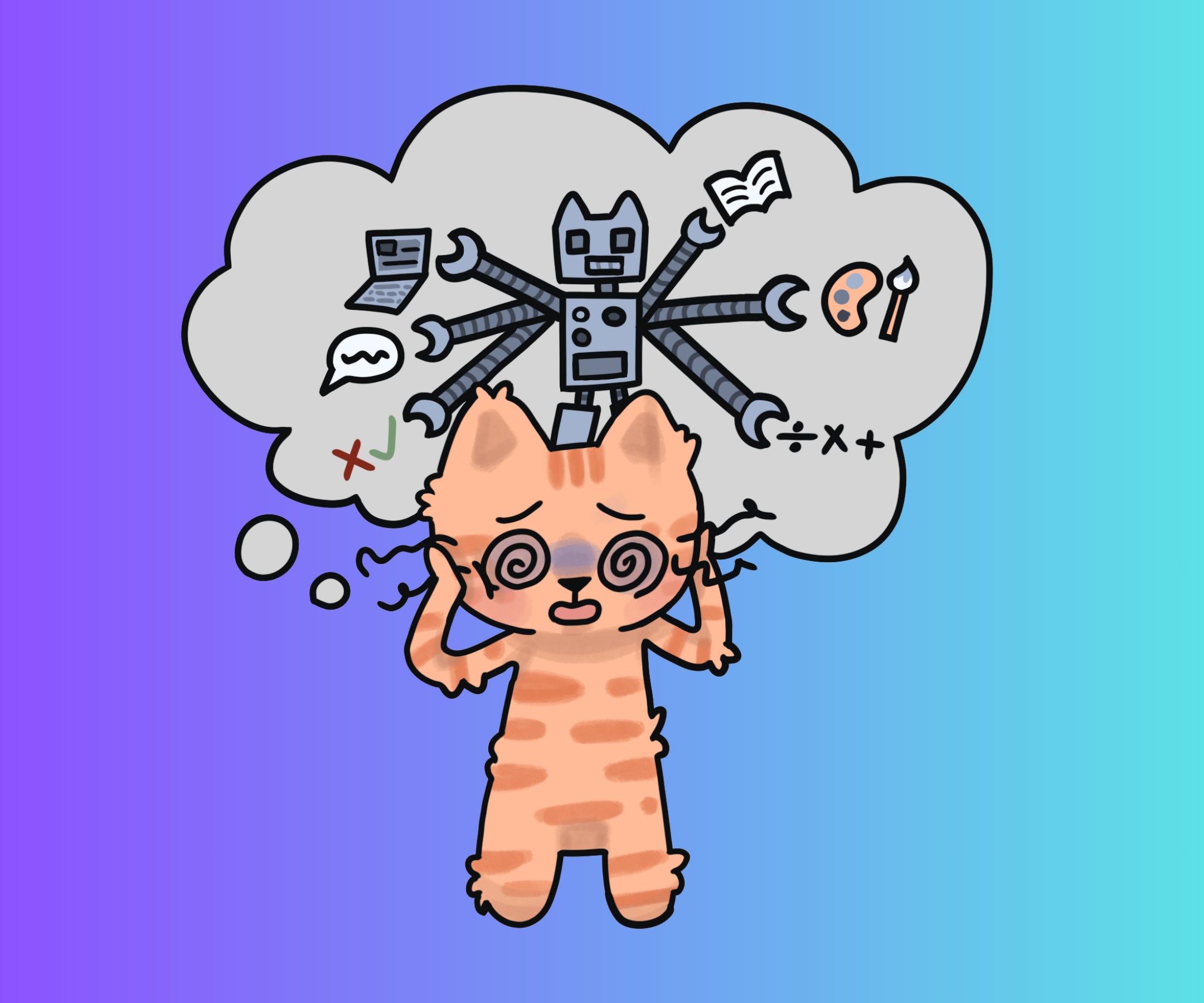
A few weeks ago, I sat down to dinner with a group of executives, founders, and investors in San Francisco, hosted by my friends at MediaMint. It was the kind of dinner that feels completely ordinary here and utterly surreal everywhere else.
We went around the table to introduce ourselves and share how we were using AI. Someone was building an agent to manage their household. Another person was running three agents in parallel before leaving the house, so there would be results waiting when they got home. One executive was using NotebookLM to generate custom podcasts about AI news so she could stay current during her commute. Someone else was using AI to summarize long documents that, as it turned out, may have been written largely by AI in the first place.
There was real excitement in that room. But underneath it, something else was running quietly, like a current.
Fear.
Not fear that AI was coming. Everyone at that table knew it was already here. It was the fear of falling behind. The fear that every moment you weren’t building, automating, testing, or optimizing was a moment wasted. Walking down the street and noticing the trees had somehow become an opportunity cost.
At some point, I looked around and said what I was thinking: “This is very normal for San Francisco. But this is not normal for the rest of the world.”
One investor called it AI psychosis. It’s a dramatic phrase, but I understood exactly what he meant. It’s that feeling that every minute not spent learning, building, or automating is a minute permanently lost. And the strange part is that the people most affected are often the ones who are furthest ahead. Everyone in that room was likely in the top fraction of a percent in their understanding of AI, and yet no one felt calm. No one felt like they had enough time.
The candy store problem
My friend George Lee, who has spent years working inside some of the fastest-moving companies in tech, described it perfectly. He said working at a cutting-edge tech company is like being a kid in a candy store. Everything looks exciting, new, and delicious. The danger isn’t that you try something. The danger is that you overdo it.
I found myself doing exactly that.
I subscribed to a dozen AI newsletters. I checked LinkedIn and Threads constantly to see what was happening. I tried to follow every new trend and learn every new technique. I told myself I was staying current. I told myself this was what staying relevant looked like.
But I didn’t feel smarter. I felt more behind than ever. As if knowing more had somehow made me more aware of how much I didn’t know. The ocean kept getting bigger the further I swam into it.
That’s the paradox no one talks about. The more you consume, the more there is to consume. The faster the field moves, the faster you have to run just to stay in place.
More efficient, more busy
Someone told me recently that AI had made them significantly more efficient, but also significantly more busy. It was almost as if being able to do more created more to do.
I haven’t stopped thinking about that.
Because it might be the central tension of this moment. AI can help you do more. But doing more doesn’t automatically mean doing it better. When you clear the pile in front of you, you often discover a longer pile hiding behind it. When you remove the friction of starting something, you also remove the natural stopping points that used to make you ask whether it was worth doing at all.
Before AI, if a task took ten hours, you had to make a decision. Is this worth ten hours of my life?
Now, if it takes ten minutes, you just do it. And then you do ten more things like it.
I think about it like a treadmill. You keep adding speed because you can. But a faster treadmill isn’t taking you somewhere different. It’s taking you to the same place, only more breathlessly.
We tell ourselves we’re saving time. But sometimes we’re just filling the saved time with more motion.
The world is not your LinkedIn feed
Here’s something worth remembering: most people are not doing any of this.
Most people are not spending their evenings setting up their Mac Minis to run OpenClaw. Most people are not using AI to generate podcasts about AI so they can discuss AI at the next event about AI. Most people are not kicking off multiple agents to run tasks while they walk their dog.
Most people are working their jobs, raising kids, caring for aging parents, paying bills, managing a household, and occasionally trying to figure out what everyone keeps talking about. For them, AI is something they’ve heard is important but don’t know where to start. It’s a technology that feels both magical and completely alien.
ChatGPT launched in November 2022. That’s less than three years ago.
Three years after the consumer internet started breaking into broader awareness, it was 1998. Google had just been founded. Amazon was still mostly selling books. Facebook didn’t exist. YouTube didn’t exist. The iPhone didn’t exist. The behaviors and companies that now define our digital lives hadn’t taken shape yet.
We were right that the internet would change everything. We were often very wrong about how, when, and who would lead it.
That’s where we are with AI. We are not at the end of this story. We are in the first chapter. And most of the world hasn’t started reading yet.
What AI can and can’t do
I believe deeply in what AI can do. I spend my days thinking about how it can transform how we work, remove the drudgery from our jobs, and help people do things that used to feel out of reach.
But I also know what I don’t want.
I don’t want my life to be about hyper-optimization. I don’t want to measure my days by how many agents I ran or how many things I’ve successfully automated away. I don’t want every walk to become a learning session and every quiet moment to become a productivity problem to solve.
I want time to think, to consider, and to strategize. I want scarcity to drive prioritization and prioritization to drive decision-making. I want to sit with a hard question long enough that a real answer emerges, not just the first one.
That is what makes us human. And it is what AI cannot replace.
The most important decisions and epiphanies of my career were not made faster with better tools. They were made in the margins — on a long flight, during a quiet walk, in a conversation I almost skipped, while reading something on a whim. Those moments don’t show up in any workflow. But they are the ones that have mattered most.
The permission you didn’t know you needed
There’s a difference between staying curious and staying frantic. You can engage seriously with AI without being consumed by it. You can be thoughtful about what’s coming without making it the organizing principle of your entire life.
So here’s what I want to offer you, because I needed someone to say it to me.
It’s okay to let some things go. You don’t have to have an opinion on every model release or try every tool. The important developments will find you. It’s okay to protect the pauses, because not every idle moment is wasted — some of your best thinking happens in the gaps. It’s okay to go deep on fewer things, because one tool that actually changes how you work is worth more than ten you sampled and abandoned. And it’s okay to ignore the bubble. San Francisco is not the world. LinkedIn is not reality. Measure yourself against your own goals, not someone else’s performance.
The stillness isn’t a bug in your productivity. It’s a feature.
The real question
AI will make us better at many things. It will reduce repetitive, tedious work. It will change jobs and create new ones. It will help some people do things that used to require an entire team.
But the question was never whether AI can help us do more. It can. The question is what we choose to do with the space it creates.
Will we use every gain in efficiency to add one more thing to the treadmill? Or will we use it to unleash what humans are uniquely suited for — thinking carefully, connecting meaningfully, and spending our time on the things that actually matter?
AI should not make you feel like you’re always behind. Sometimes the most powerful thing you can do is stop running for a minute. Creativity and ingenuity have never come from doing more. They come from making space to think, daydream, and wonder.
That is something AI can’t take away.
I fell into the trap of feeling left behind starting last fall through most of this year...until I also took a step back and realized this is now what I want out of my life.
Remember talk of the four day work week??? Why isn't AI helping us achieve THAT instead of having agents run 24/7 and pinging us for permission every 20 minutes?!
I enjoyed the read. I was thinking about it today and I’m glad you shared it.