

I have always loved to quantify things. For years, I asked my teams to rate things on a scale of 1 to 10, whether it was a temperature check on how a meeting went, how strongly they felt about a decision, or how excited they were about an opportunity. The engineer in me craved quantification. And these ratings helped me create data where none previously existed.
This desire came to a head when I was diagnosed with cancer last year. I read voraciously once I had the mammogram and saw the images. I found out it was over an 80% chance it was DCIS even before the biopsy confirmed it. So I was mentally prepared to hear the news when they shared the results with me. I find comfort in knowing my realistic odds because it helps me manage my emotions and expectations.
When the colonoscopy a few weeks ago showed a mass, the doctor said I needed to do a CT scan to see what it was. Suddenly, a routine procedure turned into something more. I had no way of contextualizing the situation, so I started hunting for clues to help me make sense of the news.
The doctor who did the colonoscopy said there was no way to know given the location. He suggested I wait until the biopsy and meet with the gastroenterologist when the results come in. When I met with her, she said the surface biopsy was clean, but suggested I wait until the CT scan. Then the scan results returned, and she repeated that there was no way to know if it was cancer. I asked her what the chances were, and she struggled to answer. I felt like I was playing a guessing game. When someone tells you there is a chance it is cancer, your first thought is 1% or 100% or somewhere in between?
Eventually, after asking every doctor I met with what the chances were, the surgeon said it was hard to tell, but the probability it was cancer is 60%. He caveated that it was just a guess based on his experience, but I immediately felt relief. He went on to explain that even if it was cancer, if it hasn’t spread, then the surgery should remove it fully without further treatment such as radiation or chemo.
What You Say is Not What Others Hear
After we scheduled the surgery, we spoke to the kids. I explained that there was a 60% chance of cancer, but a very good chance that the surgery would resolve everything either way.
I thought it was good news! After all, last year, basically it was nearly a certainty that I had cancer. This time, I had a number, and the number was not bad.
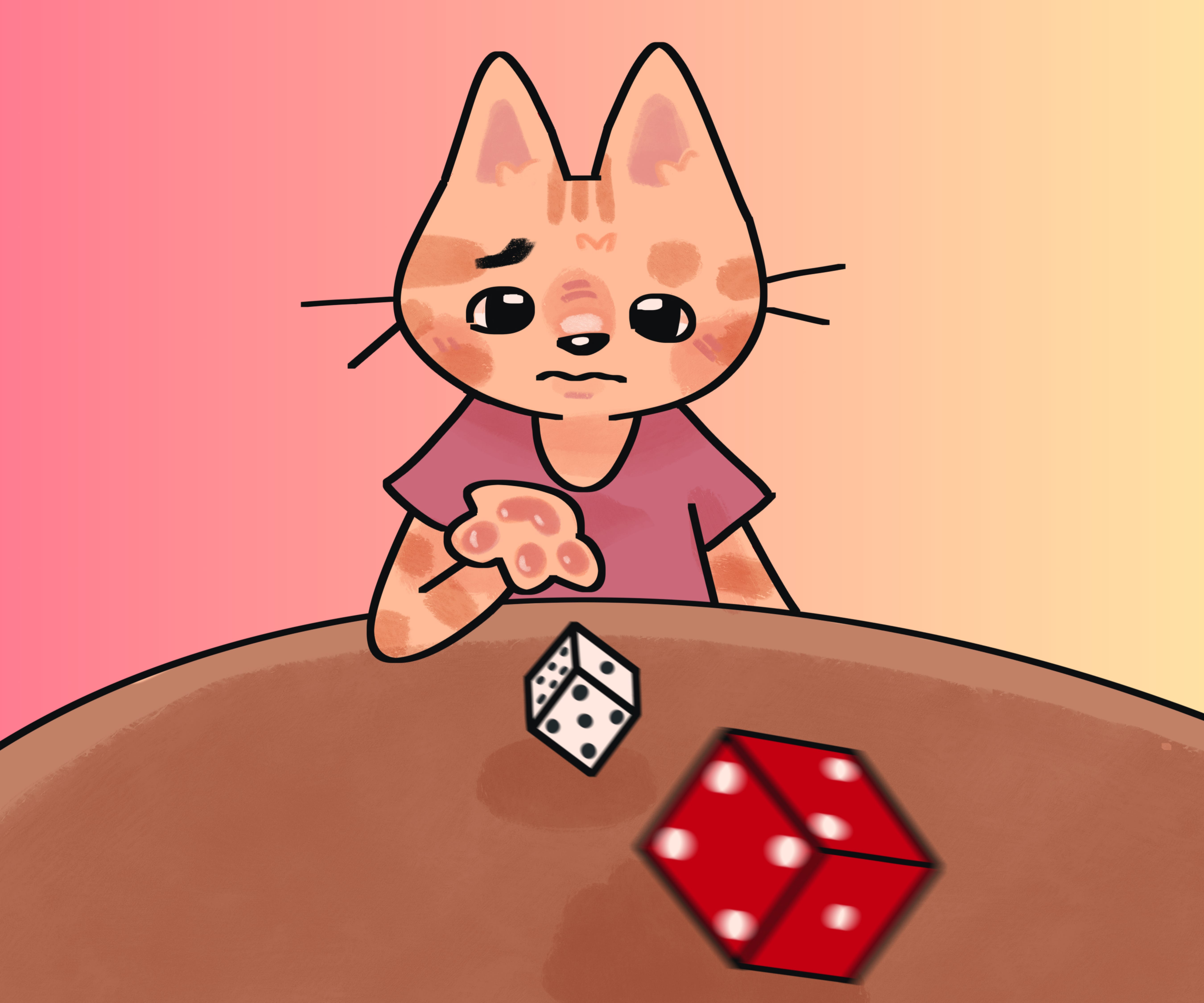
I kept going, trying to build the case to them. Even if it spread a little bit, I said, there is still a good chance I will not need chemo. Even in the worst version of this, maybe there is only a 10 percent chance that something serious happens. I was stacking probabilities like a deck of cards, showing them each one, certain that if I just laid out enough good odds, they would feel what I felt when I heard the numbers. This is a manageable risk, not a looming disaster.
I saw this all as excellent news and a good-ish prognosis. That is not what they heard at all. While they initially didn’t show much reaction, that night two of them came to me really upset.
“What if you are really unlucky? You already had cancer once. You are not lucky.”
“That is the same chance Bethany had of getting into Duke. Things that have a small chance happen all the time.”
“You are going to die. And Dad will remarry someone we don’t like because he can’t be alone.”
“Both your parents died of cancer. And our other grandma was diagnosed with lymphoma just before she died.”
It was a rough evening. Yes, my parents died of cancer, but my mom basically had stage IV cancer for 8 years. And the lymphoma was not what killed their other grandma, though they did find it after she passed.
Listening to their rationale as to why they were scared, I saw the world through their eyes. The numbers I offered as comfort had become, in their mind, a probability that their mother might not survive this and that their whole family might be rebuilt around a stranger. I handed them a spreadsheet, and they read the worst-case scenario.
How We Process Information Differently
Here is where I went wrong. Each of us reaches for the thing that helps us make sense of fear, and we assume it will help the people we love the same way it helps us. My husband David has spent this whole process saying, over and over, you will be fine. No numbers, no nuance, just a flat statement repeated until it becomes true through sheer repetition. That is how he processes uncertainty. He ignores the parts he cannot control and holds tightly to the parts he can will into being. When I expressed my frustration to my sister, she replied, “It’s just how optimists deal with uncertainty. They assume the best until they hear otherwise.” Whereas her husband is Pablo from The Backyardigans. He is anxious and panicky about bad news and assumes the worst. Quite the dichotomy.
I reached for numbers. My husband reached for certainty. My daughters, listening to both of us, built a worst-case scenario. None of us were lying to each other. We were all just running our fear through the filter that works for us, then handing the output to someone else as if it would work for them too.
What We Say Vs What Was Heard
I have thought a lot about how often this happens outside of hospital waiting rooms. In leadership, we do this constantly. A founder who finds comfort in data will drown a nervous team in dashboards, certain that more numbers will help them understand the nuance of their traction. A manager who copes through optimism will tell a struggling employee everything is fine during a reorg, without realizing that vague reassurance can feel like their worries are being dismissed. We communicate the thing that soothes us, and we assume the message lands. But everyone listens through their own filter. The message is whatever the other person’s filter changes the output to without your knowledge.
A few things I am trying to hold on to:
Know your own filter before you use it on someone else. I did not choose to quantify my diagnosis because it was the clearest way to reach my kids. I chose it because it was the way I deal with things. That is worth noticing before you speak, not after someone reacts badly.
The delivery is not the message. I said 60 percent and heard hope since it was not 100%. My daughter heard a door left open to the worst outcome. Neither of us was wrong about what we heard. We were just running the same information through different machinery.
Reassurance without realignment does not land. I spent hours after that conversation trying to walk the numbers back, to prove the odds really were in my favor. She was no longer listening but rather reacting. Sometimes the answer is not a more fulsome explanation. It is sitting with someone in the fear itself before you try to convince them out of it.
More likely than not is the whole sentence. I do not know what the future holds. But more likely than not, I have cancer that will be treated and resolved. And more likely than not, I will be fine. That is genuinely all I know right now. Everything past that is a question for another day, and I am trying to let it stay there instead of running the odds on it in front of the people I love.
I still do not fully know how to reassure my kids, because part of me is not entirely sure either. What I am learning is that the reassurance was never going to come from a better and more well-reasoned argument. It comes from showing up and listening to their fears and helping them process them.
If we learn to speak to the fear each person has, it will reduce the friction of communication and help us connect on a human level.
Update on the Next Cards Drawn:
Thanks for all of the support. I drafted this post before the surgery and subsequent pathology report came out. The final cards were drawn Thursday, three days after Monday’s surgery, when my colorectal surgeon called and shared the good news that the growth was surprisingly not cancer.
What a huge relief!
Turns out it was an endometriosis growth that would have obstructed my bowels at some point, so it was good to get it taken out. It may be related to the medicine I am taking for last year’s breast cancer, so more follow-up is required.
I am resting at home after a grueling week. Thanks for all of the well wishes and prayers!
Great news - I am so happy to know your results, your posts are so personable even though we have not met in person. Thank you for sharing and inspiring! Wish you speedy recovery and wish you well!
Where there is hope, there is faith.
Where there is faith, miracles happen.
:)